GR
Building Futures · CLIL Graded Readers

Real knowledge,
levelled English.

Ten CLIL readers that climb one careful step at a time, from a child's first English words to the threshold of B1.

10 titles Grades 2–7 pre-A1 → B1 Fact-checked & cited
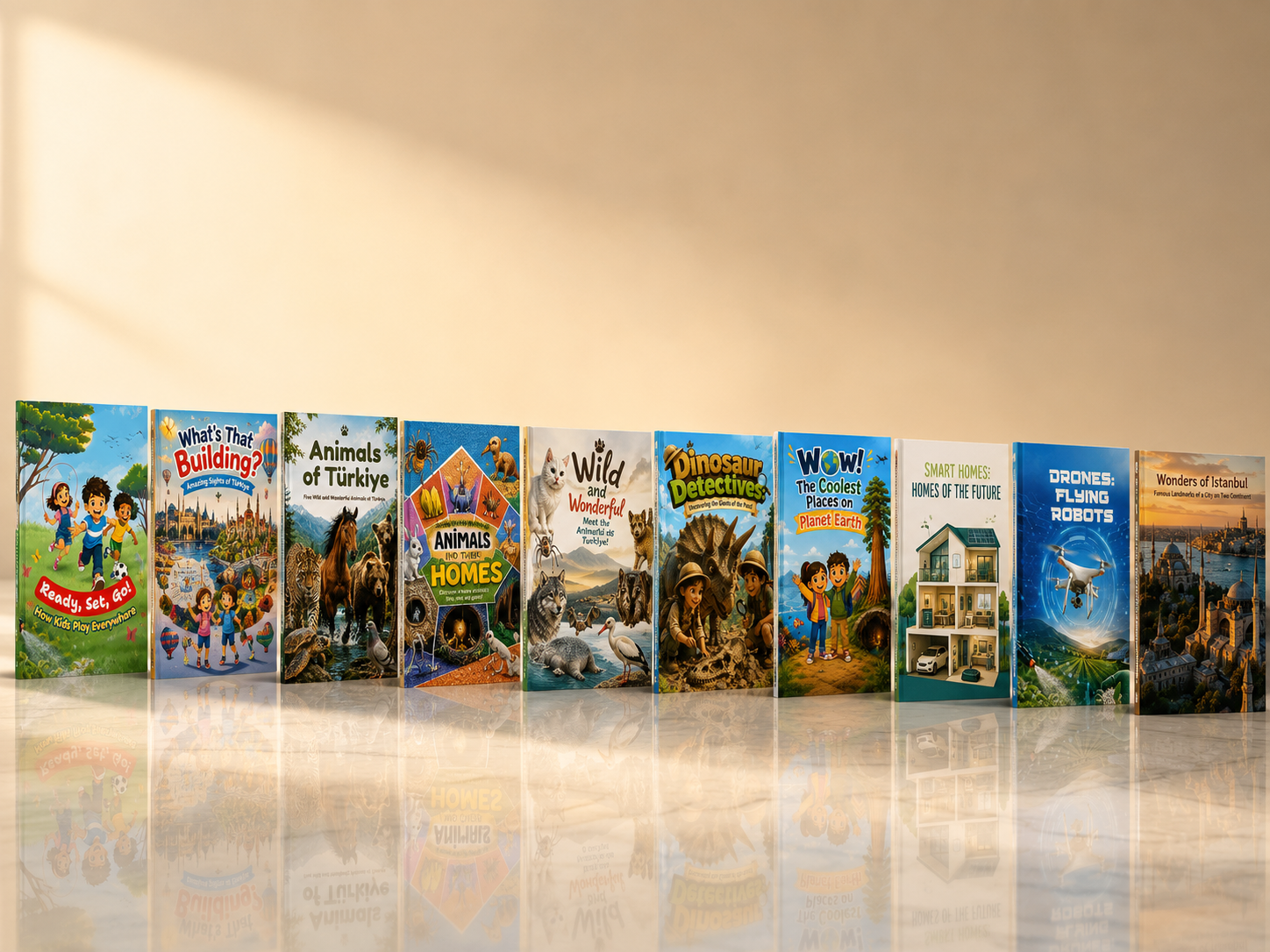
The ten graded-reader covers standing in a row, from low-A1 to B1, in warm studio light
The collection Grade 2Grade 3 Grade 4Grade 5 Grade 6Grade 7 Science · Culture · Geography
The collection at a glance

One system. Six grades.
A whole pre-A1 to B1 ladder.

This is not one book and not parallel editions of the same book. It is a collection of ten distinct CLIL readers, one per topic, built by a single rule-driven authoring system: the same 7-page chapter engine, the same apparatus skeleton, with content and language scaling by grade.

10
finished
titles
6
grade levels,
G2 to G7
58
chapters
across the set
~17,200
running reading
words in total
~551
taught headwords
(22 → ~100 by grade)
138
numbered, cited
sources
~470
estimated print pages
(structural estimate)
3
subjects: Science ×6,
Culture ×3, Geography ×1

Reading-word and page figures are approximations, computed from each reader's running prose (Pages 2 to 6) and its fixed 7-page chapter layout. The books exist as finished manuscripts, so exact typeset page counts are not yet fixed.

The reading ladder

You can see the level do its work

Ten books climb six grades with measurable, visible progression. Reading load rises from about 760 to 3,400 words per title, taught vocabulary from 22 to about 100 headwords, and the grammar ceiling opens one controlled step at a time. Bar height below shows the headword growth per grade.

pre-A1 → A1
30
Grade 2
Age 7–8 · ~760–990 words
Ready, Set, Go!
Who Lives Here?
What's That Building?
A1
40
Grade 3
Age 8–9 · ~1,035–1,205 words
Coolest Places on Earth
Dinosaur Detectives
A1+
~52
Grade 4
Age 9–10 · ~1,520 words
Wild and Wonderful:
Animals of Türkiye!
A1+ → A2
~68
Grade 5
Age 10–11 · ~2,120 words
Wonders of Istanbul
A2
~79
Grade 6
Age 11–12 · ~2,045 words
Animals of Türkiye
A2+ → B1
~100
Grade 7
Age 12–13 · ~3,240–3,395 words
Drones: Flying Robots
Smart Homes

A learner enters at, or just below, the grade's CEFR band and finishes having consolidated that band and met the structures that open the next: a student can climb the whole ladder, title by title.

Aa
The language-control engine

Levelling, engineered
and documented

Language control is the collection's backbone. It rests on a shared rulebook plus a per-grade template that fixes exactly what each level may and may not do. The signature rule is the past-tense staircase.

G2–G4
Present tense only
No past tense at all. Books are descriptive and expository. A book on extinct dinosaurs stays entirely in the present.
G5
Past simple debuts
Past simple, active voice only, for completed and historical facts. Still no passive, no present perfect.
G6
Aspect & clauses
Adds past continuous, defining relative clauses (who / which / that), more / most comparison, and zero and first conditionals.
G7
Passive & perfect
Adds the passive voice (present and past simple) and the present perfect, plus reporting that-clauses, should / might / may, and however / although / while.

Forbidden at every level: past perfect and present perfect continuous. Above-grade grammar is rephrased, never used: a Grade 5 history says "Workers built it," never the passive "It was built."

GradeAvg words / sentenceMax words / sentenceWords per chapter
Grade 24–6880–120
Grade 36–810120–170
Grade 48–1014180–260
Grade 510–1216280–360
Grade 612–1418360–440
Grade 714–1620420–520

Sentence-length bands are enforced per grade. The computed reading-word counts confirm every title sits inside its band.

Controlled vocabulary

Each title carries a Picture Glossary of key words (22 rising to about 100). New content words are bolded on first use. Recycling is designed by shape: continuous readers repeat every key word across three or more chapters; survey readers recycle a shared frame vocabulary chapter to chapter.

Quality Self-Check

A written 16-plus-item self-check is run against every reader before it is declared done: tense, aspect and voice, sentence length, page structure, vocabulary recycling, and global accessibility.

Documented ceilings

Every title's teacher's notes state its grammar-in-play and an explicit "deliberately avoided (above grade)" list, so the ceiling is documented, not just implied. Every fact is verified and cited.

An honest note on levelling

Levelling is to CEFR bands plus curated key-vocabulary sets, controlled by rule and self-check. There is no third-party levelling report and no mapping to an external headword list such as Oxford, Cambridge EVP or CEFR-J. If a buyer requires certified levelling, that is a post-production step, and we are glad to arrange it.

The ten books

Ten subjects, one architecture

Every title is a separate book with its own subject, chapters, vocabulary and visual style. Two share a country focus and are clearly different books: Wild and Wonderful (Grade 4) and Animals of Türkiye (Grade 6) profile entirely different animals at different levels.

1
Grade 2 · CultureTitle 1 of 10 · continuous

Ready, Set, Go! How Kids Play Everywhere

Play is universal: children everywhere play the same kinds of games under different local names, the "same game, many names" idea.

pre-A1 / A1Age 7–8 5 chapters~760 words22 headwords12 sources
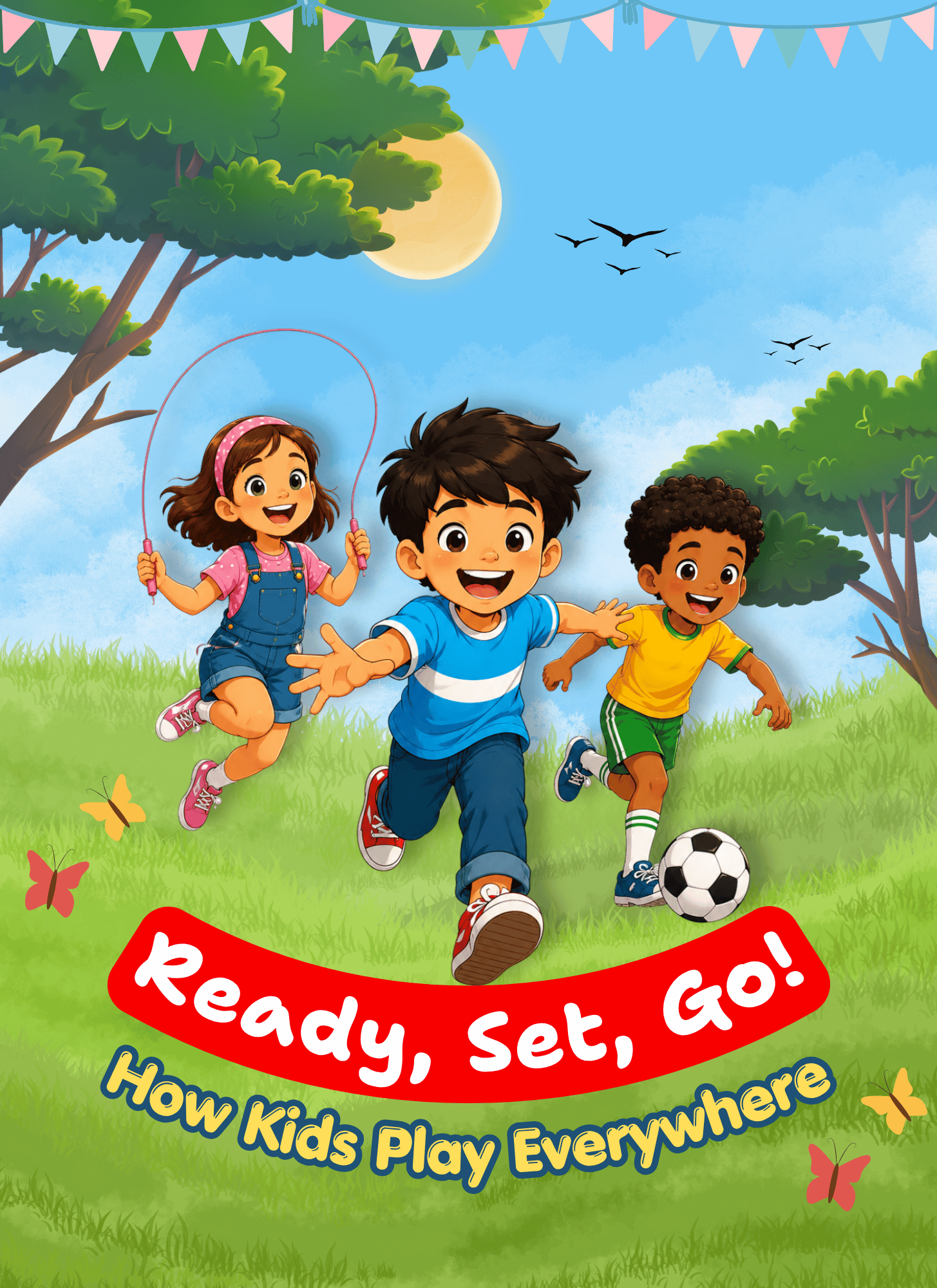
Ready, Set, Go! cover — children of many cultures playing games together
Chapter highlights
  • Tag is played worldwide as tig, la traes, oni and pega-pega.
  • Football is loved from Brazil to Kenya to Spain.
  • Kites are a 2,000-year-old Chinese invention that children still make today.
Curriculum links CultureEarly GeographyMusicGlobal-diversity values
2
Grade 2 · ScienceTitle 2 of 10 · survey / profile

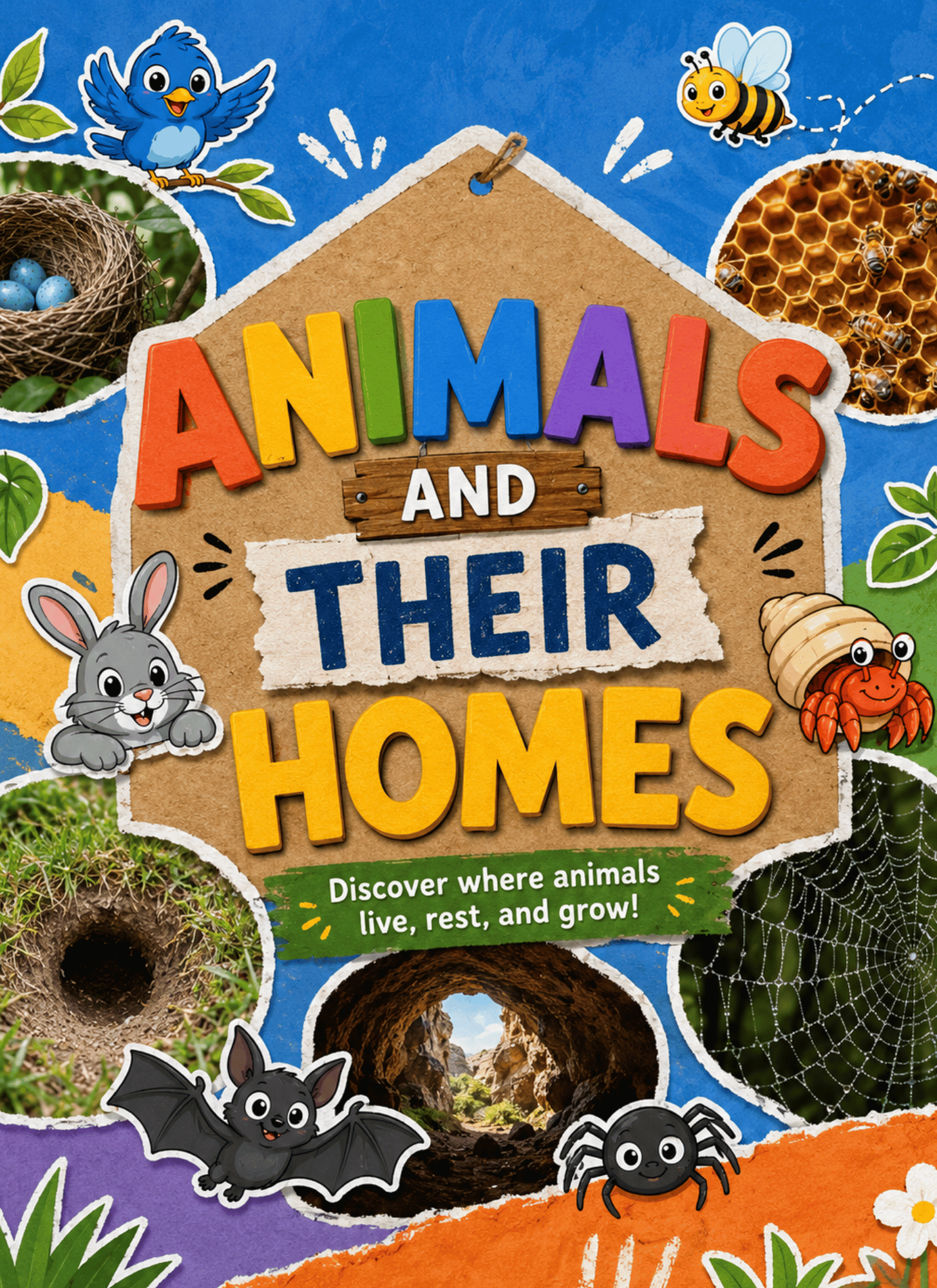
Who Lives Here? Looking at Animal Houses

Six kinds of animal home, taught largely through real photographs and driven by the recurring question "Who lives here?"

pre-A1 / A1Age 7–8 6 chapters~865 words30 headwords18 sources
Who Lives Here? cover — a collage of animal homes: nest, burrow, web and hive
Chapter highlights
  • Robin eggs are blue, tucked inside a woven nest.
  • Prairie dogs dig underground "towns".
  • A hermit crab's shell is not part of its body.
Curriculum links Science / BiologyObservationSorting & sequencing
3
Grade 2 · Culture · TürkiyeTitle 3 of 10 · survey / profile

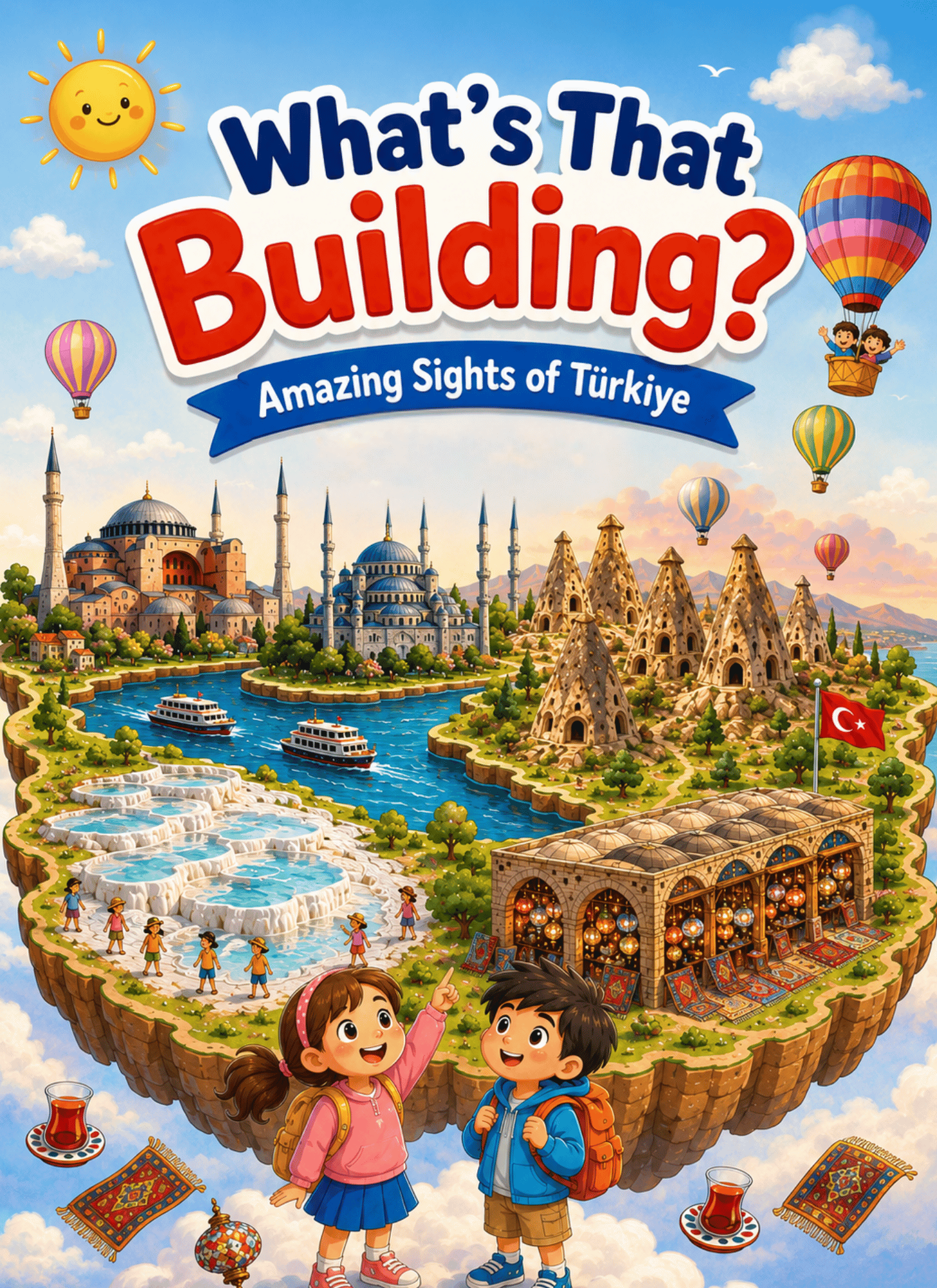
What's That Building? Amazing Sights of Türkiye

A guided tour of five famous Turkish sights with two cartoon tour-guides, mixing built landmarks with natural wonders.

pre-A1 / A1Age 7–8 6 chapters~990 words23 headwords20 sources
What's That Building? cover — two friendly cartoon guides in front of Hagia Sophia and Cappadocia
Chapter highlights
  • In Cappadocia, people live in houses carved inside rock.
  • Pamukkale is a "Cotton Castle" of soft white stone.
  • The Grand Bazaar glows with mosaic lamps.
Curriculum links Culture / GeographyMaths (counting)Art
4
Grade 3 · GeographyTitle 4 of 10 · survey / profile

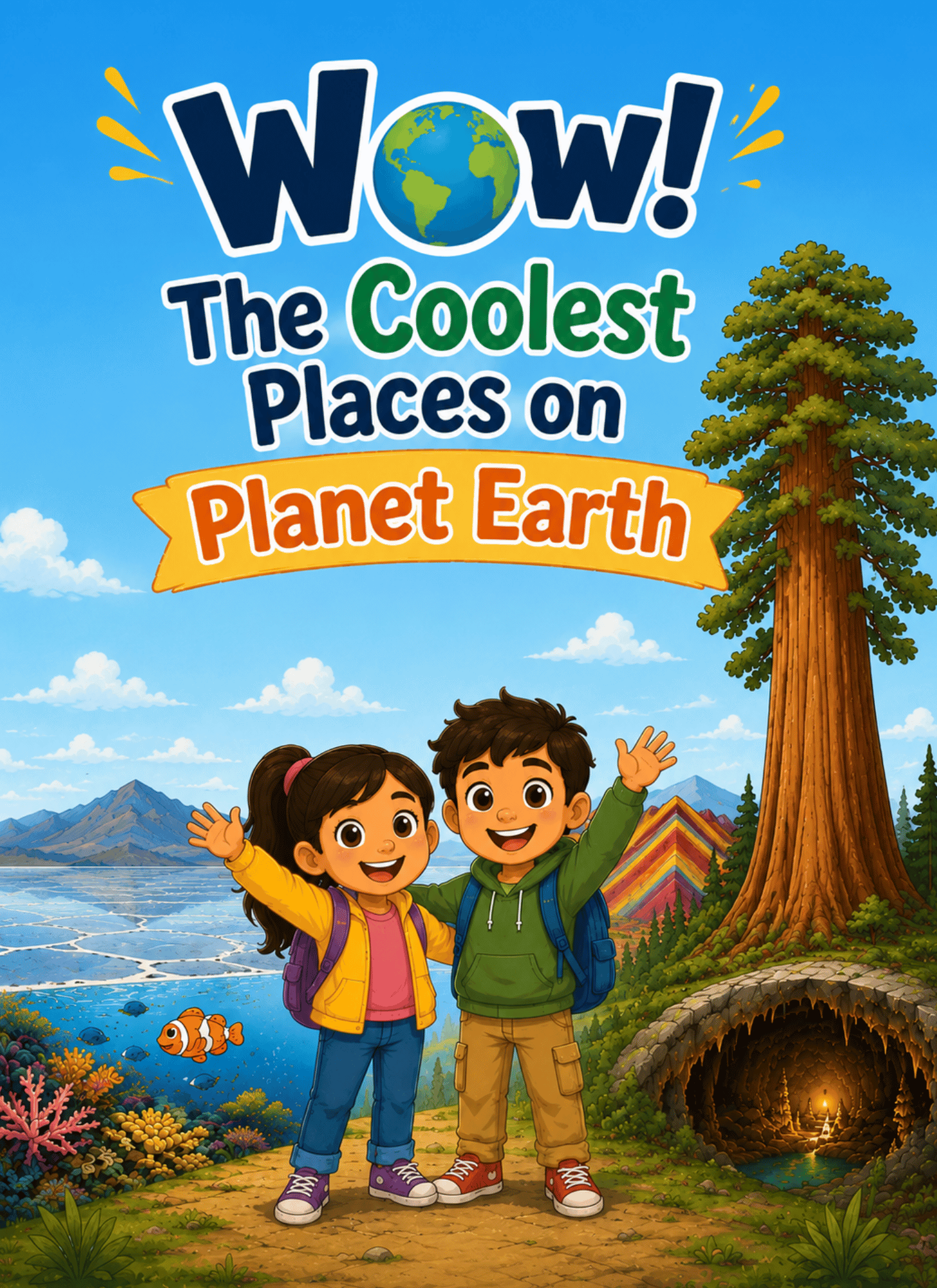
Wow! The Coolest Places on Planet Earth

Six spectacular real natural wonders across four continents, explored by two kid-explorers.

A1Age 8–9 6 chapters~1,205 words40 headwords12 sources
Coolest Places on Planet Earth cover — two kid-explorers on the mirror-like Salar de Uyuni salt flat
Chapter highlights
  • Salar de Uyuni: after rain, a film of water becomes a mirror, and you can "walk on the sky".
  • Waitomo glowworms glow like stars in a dark cave.
  • Giant redwoods stand taller than ten houses.
Curriculum links GeographyScienceMaths (comparatives)Art
5
Grade 3 · ScienceTitle 5 of 10 · survey / profile

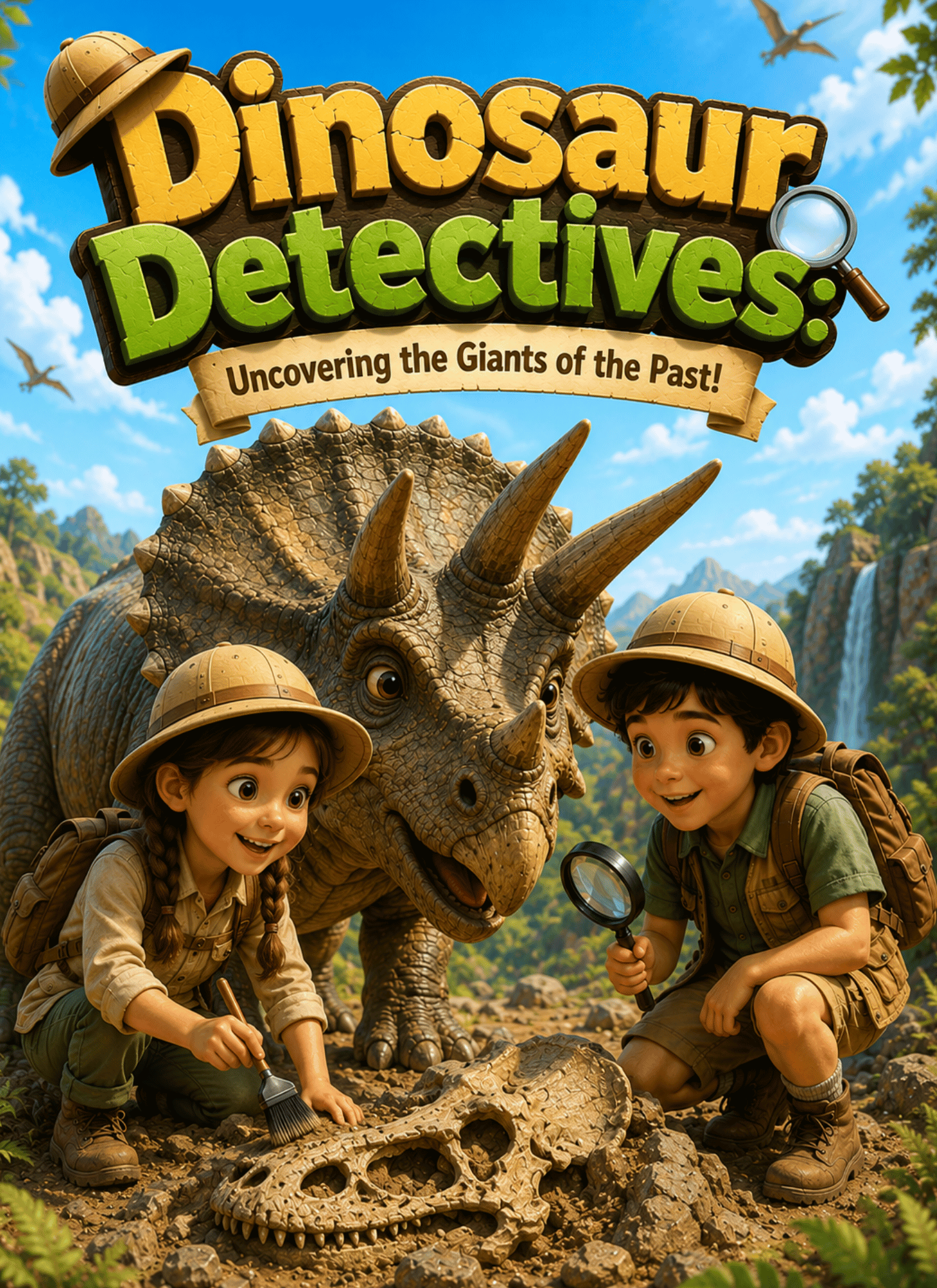
Dinosaur Detectives: Uncovering the Giants of the Past!

What dinosaurs are and how scientists learn about them: fossils are clues, and scientists are detectives.

A1Age 8–9 6 chapters~1,035 words36 headwords12 sources
Dinosaur Detectives cover — a child detective with a magnifying glass beside a friendly dinosaur skeleton
Chapter highlights
  • T. rex had about 60 teeth, one longer than your finger.
  • Triceratops was bigger than an elephant.
  • A bird, even a chicken, is a living dinosaur.
Curriculum links Science / PaleontologyMaths (measuring)Art
6
Grade 4 · Science · TürkiyeTitle 6 of 10 · survey / profile

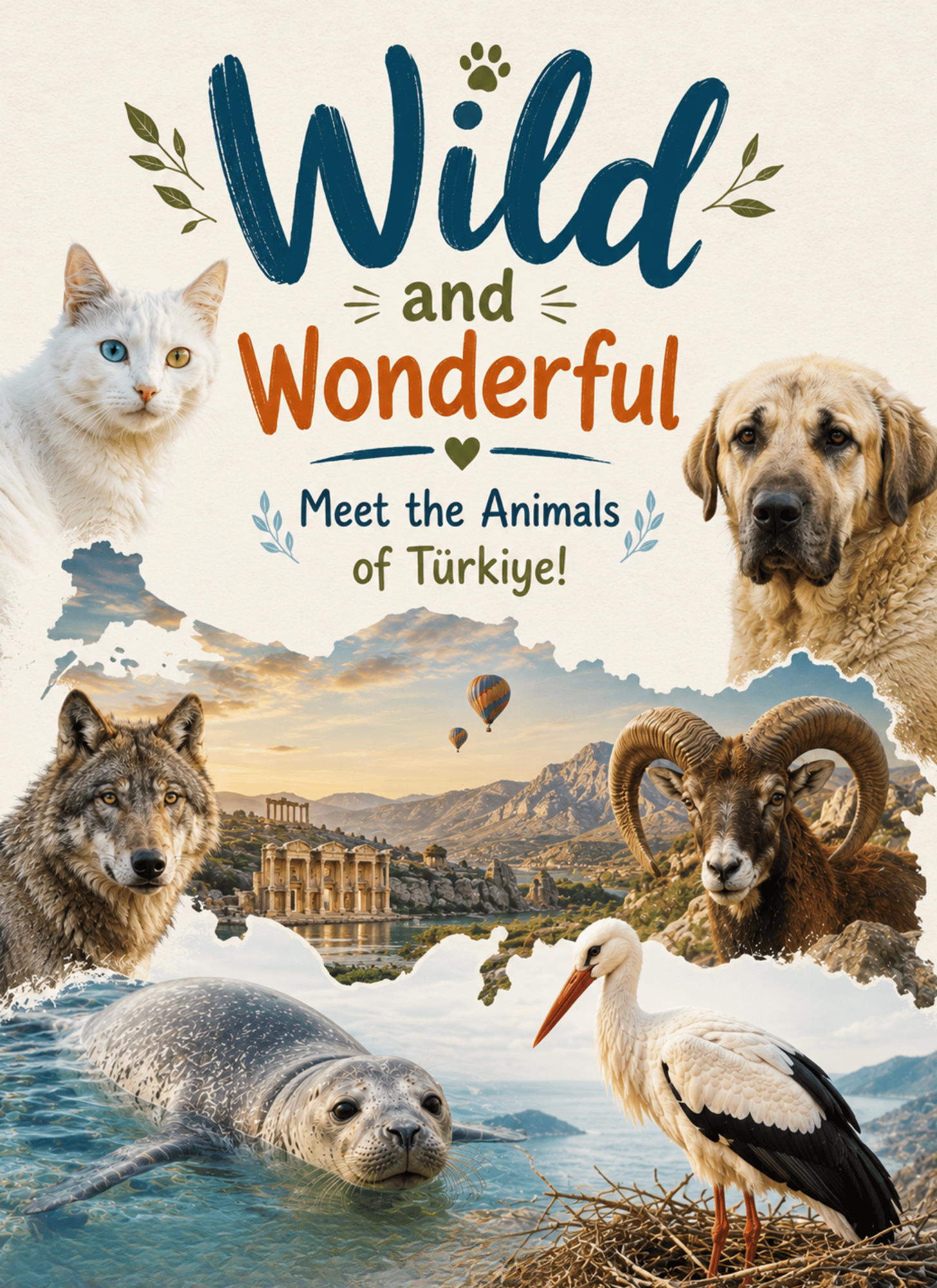
Wild and Wonderful: Meet the Animals of Türkiye!

Natural history of six iconic Turkish animals, with a predator-and-prey thread and a hopeful conservation message. Profiles the Van cat, Kangal dog, grey wolf, mouflon, white stork and monk seal.

A1+Age 9–10 6 chapters~1,520 words~52 headwords6 sources
Wild and Wonderful cover — a Van cat, Kangal dog and white stork in a Turkish landscape
Chapter highlights
  • The Van cat has two eye colours, and it swims.
  • The Kangal dog turns wolves away without hurting them.
  • The monk seal is one of the rarest sea animals.
Curriculum links ScienceGeographyMaths (graphing)Conservation values
7
Grade 5 · Culture · TürkiyeTitle 7 of 10 · survey / profile

Wonders of Istanbul: Famous Landmarks of a City on Two Continents

Six landmarks of a city that straddles Europe and Asia. The first title to use the past simple, built as a past-and-present contrast.

A1+ / A2Age 10–11 6 chapters~2,120 words~68 headwords7 sources
Wonders of Istanbul cover — the Istanbul skyline across the Bosphorus with Hagia Sophia and Galata Tower
Chapter highlights
  • Hagia Sophia was finished in 537, becoming church, mosque, museum, then mosque again.
  • The Basilica Cistern holds 336 columns and two carved Medusa heads.
  • The Grand Bazaar has more than 4,000 shops on 60 streets.
Curriculum links HistoryGeographyArtMaths (timelines)
8
Grade 6 · Science · TürkiyeTitle 8 of 10 · survey / profile

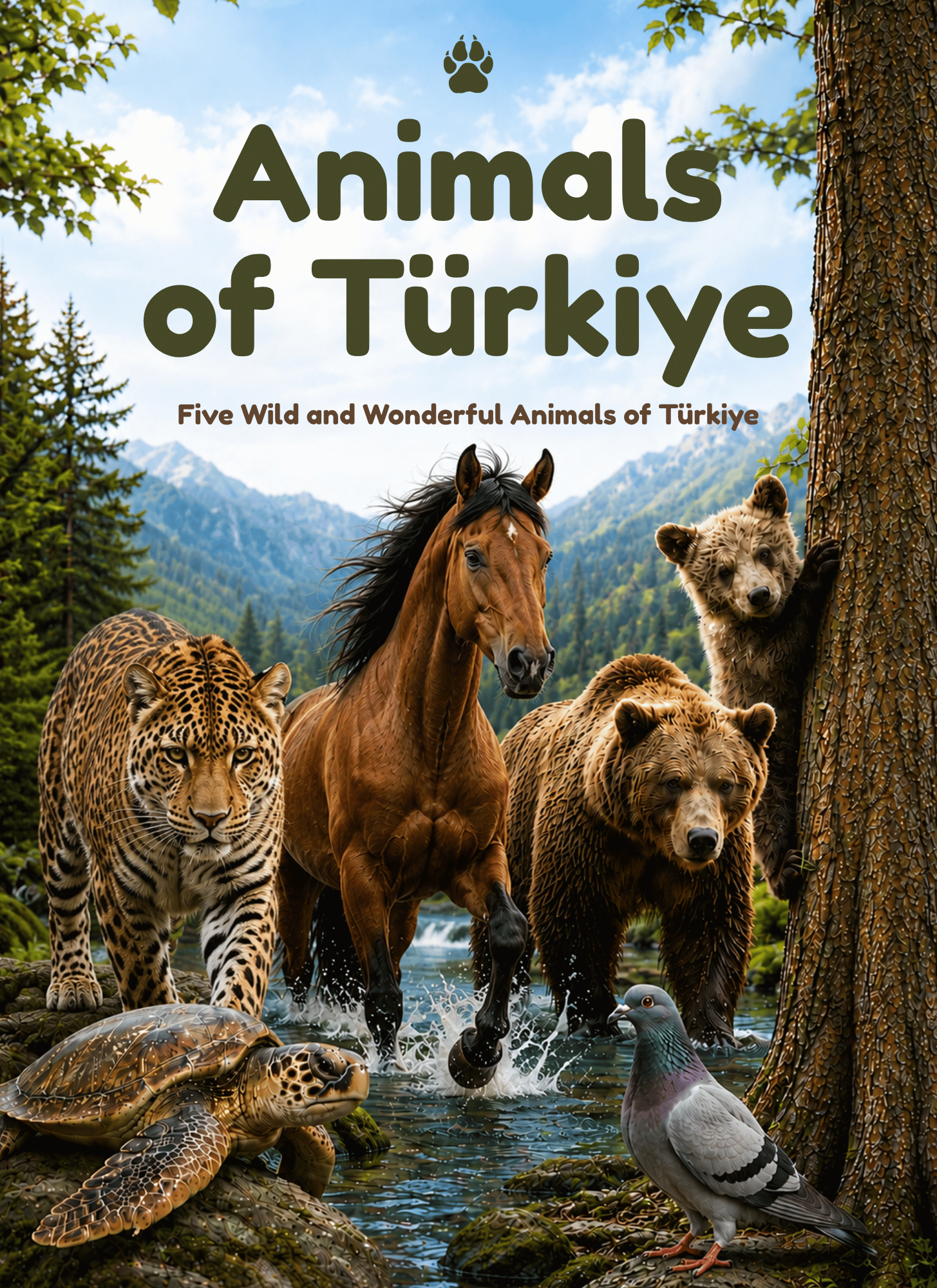
Animals of Türkiye

Five animals spanning wild predator to working companion, each with a conservation-or-care angle. A different, higher-level book from Wild and Wonderful: it profiles the Anatolian leopard, brown bear, loggerhead sea turtle, Turkish pigeon and Turkish horse.

A2Age 11–12 5 chapters~2,045 words~79 headwords10 sources
Animals of Türkiye cover — an Anatolian leopard and loggerhead sea turtle in a realistic style
Chapter highlights
  • The Anatolian leopard, thought gone since 1974, was filmed alive in 2019 and again in 2024.
  • The brown bear weighs over 200 kg, heavier than three big men.
  • Loggerhead hatchlings follow the bright horizon to the sea.
Curriculum links GeographyScience (food webs)HistoryCitizenship
9
Grade 7 · ScienceTitle 9 of 10 · continuous

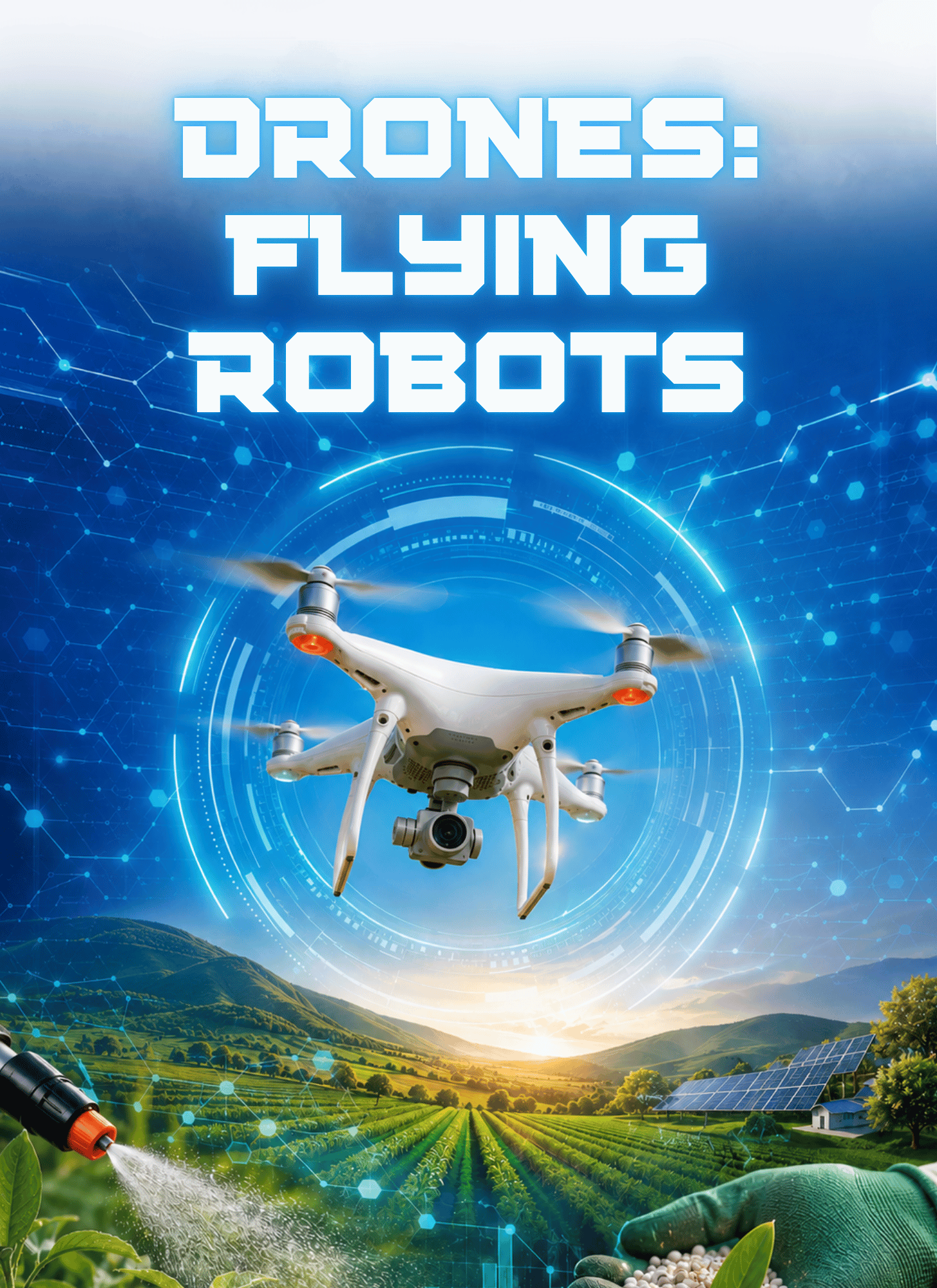
Drones: Flying Robots

The science and uses of drones, "from flying targets to flying helpers," across six real-world domains ending in space.

A2+ / B1Age 12–13 6 chapters~3,240 words101 headwords24 sources
Drones: Flying Robots cover — a modern quadcopter drone against the sky with a hint of Mars
Chapter highlights
  • The word "drone" means the male bee; early drones were army targets.
  • A 2018 Australian beach rescue and Rwanda blood deliveries show drones saving lives.
  • NASA's Ingenuity helicopter flew 72 times on Mars.
Curriculum links PhysicsGeographyMathsCitizenship
10
Grade 7 · ScienceTitle 10 of 10 · continuous

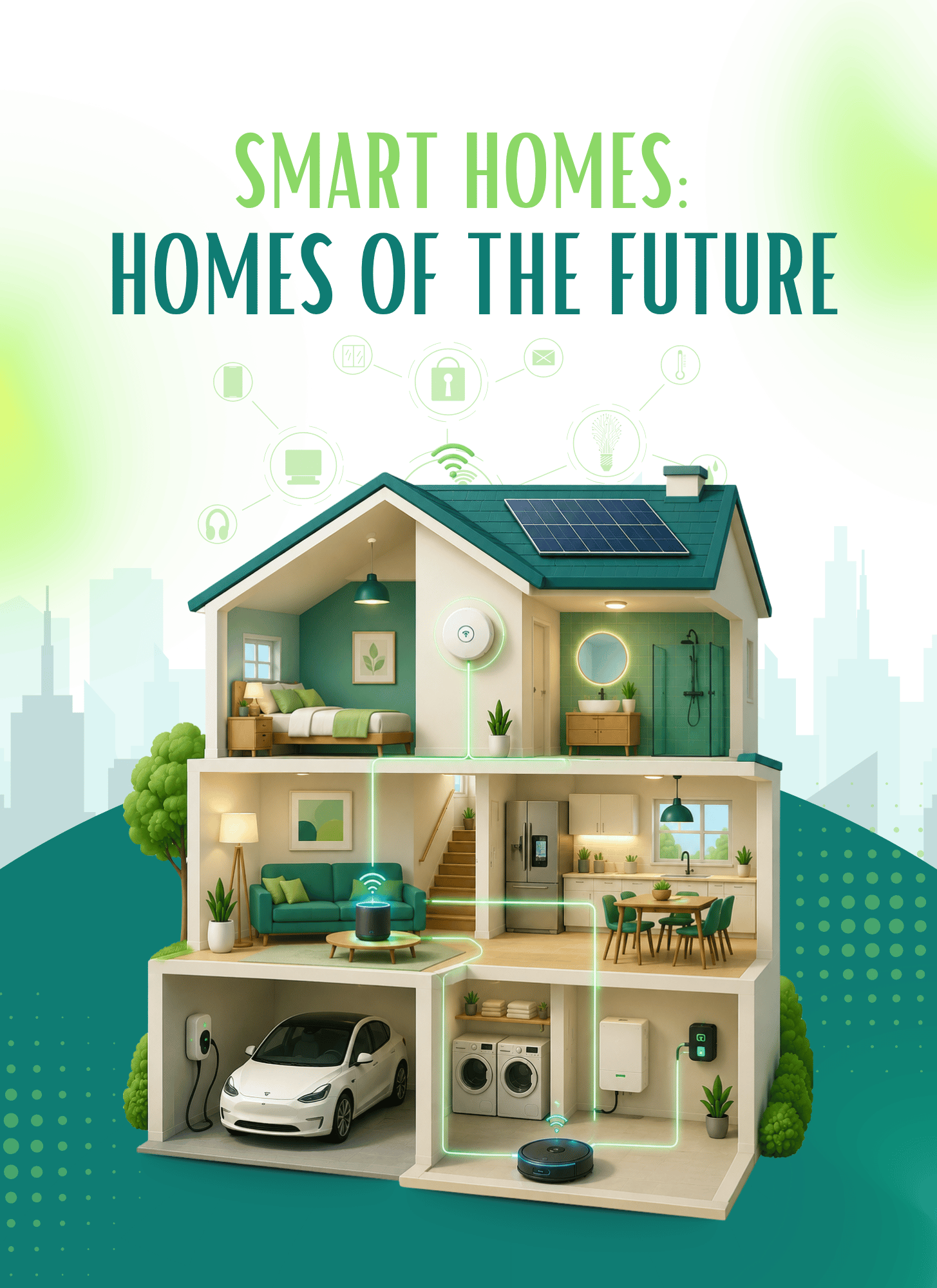
Smart Homes: Homes of the Future

What a smart home is and how it works, arced from definition to history to mechanism to energy to safety and privacy to future cities, framed inclusively and ending human-centred.

A2+ / B1Age 12–13 6 chapters~3,395 words100 headwords17 sources
Smart Homes cover — a warm modern living room with subtle smart devices
Chapter highlights
  • A smart-home timeline from 1966 to 2014, ECHO IV to the smart speaker.
  • LEDs use up to 90% less energy and last up to 25 times longer.
  • An honest privacy chapter: "a camera does not belong in a bedroom."
Curriculum links Computing / ITHistoryEnvironmental scienceDesign & technologyDigital citizenship
Inside every reader

Learn one book, teach all ten

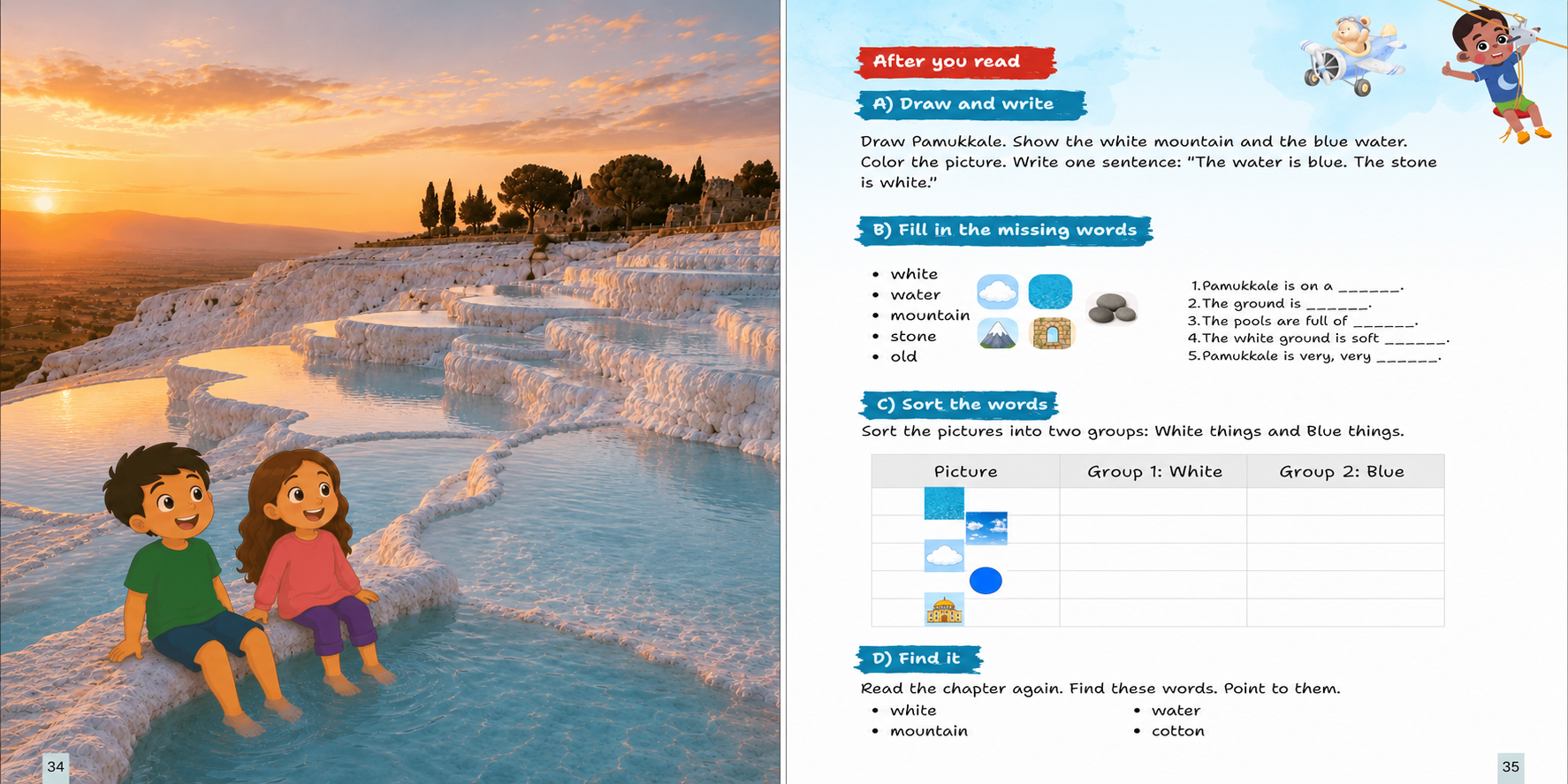
Every title is built on one shared apparatus skeleton, so a teacher who learns one book can teach the whole collection. The heart of it is a fixed 7-page chapter engine.

1
Pre-reading
Four options (A–D): picture walk, new words, prediction, TPR and more.
2
Full-page image
A single, immersive full-page picture.
3
Reading text
Levelled prose with a supporting image and bolded new words.
4
Reading text
Text-dominant at Grades 5 to 7; the in-chapter comprehension check.
5
Reading text
Reading continues with its supporting image.
6
Full-page image
A second full-page picture closes the reading.
7
Post-reading
Four options (A–D), at least one always a drawing or creative task.
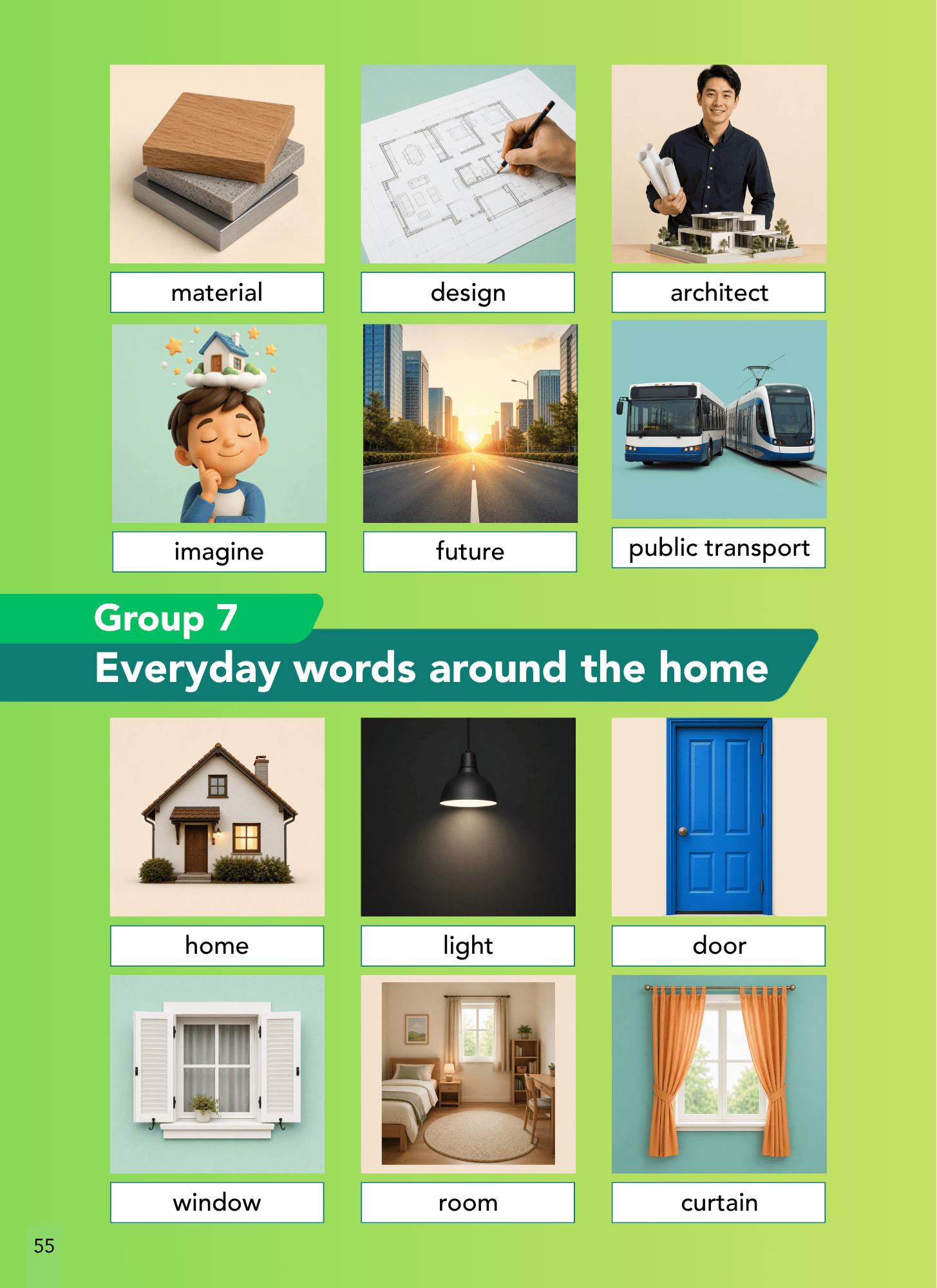
Picture Glossary

A headword, a child-friendly definition and a single unmistakable visual cue per word, placed before Chapter 1. Images are reused across activities to reinforce the word-image link.

One check per chapter

A single comprehension check per chapter, with the task type varied chapter to chapter so the skill load rotates: Yes/No, True/False, matching, sequencing, gap-fill, and level-specific checks higher up.

Five-option project

An end-of-book project offering five options (A–E), choose one: a mix of individual, pair and whole-class outputs, from mini-books and map posters to class museums and board games.

Pre and post menus

The A–D options draw from a rich menu: picture walk, vocabulary preview, prediction, TPR, listen-and-point, odd-one-out, and from Grade 3 up, word-webs, KWL, anticipation guides and cause-and-effect prediction. Post-reading always keeps at least one creative or hands-on task.

Numbered Sources

Every reader closes with a numbered Sources section, 138 citations across the collection, from named institutions such as NASA, NOAA, the Natural History Museum, AMNH, the US DOE and the IEA. The books are read-aloud friendly by design.

A finished 7-page chapter laid out: two full-page images plus the reading pages and A–D tasks
A single Picture Glossary entry: headword, child-friendly definition and its visual cue
Showcase moments

Three pages that sell the idea

Real subject knowledge, taught at level, with a sense of wonder that carries a reluctant reader through the page.

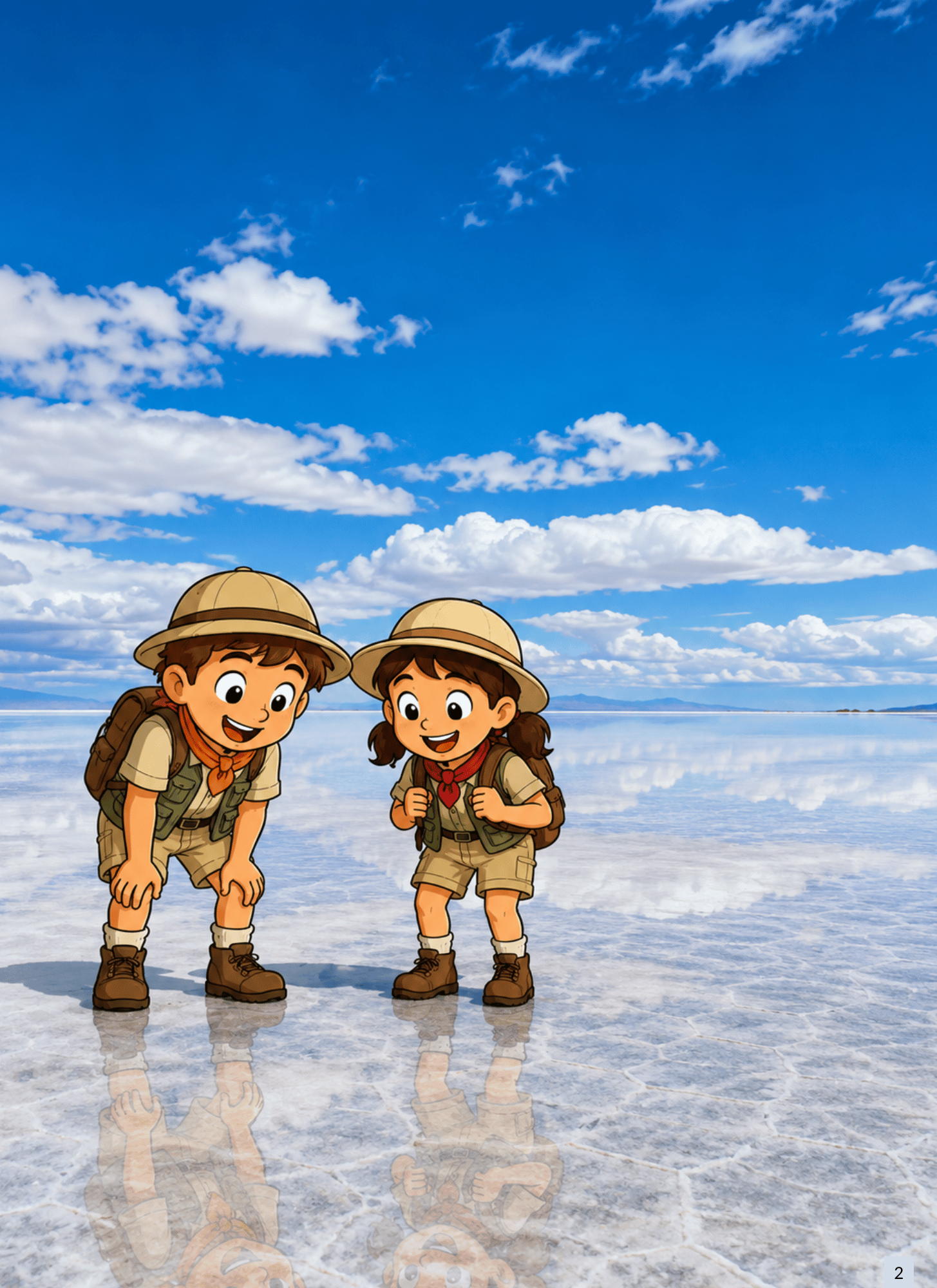
Two kid-explorers looking down at clouds mirrored beneath their feet on the salt flat
Coolest Places · Grade 3 · Ch 1

Walk on the sky

After rain, a thin film of water turns the world's largest salt flat, Salar de Uyuni, into a perfect mirror of the clouds. The spread asks "Is this the sky or the ground?" It teaches real geography at A1, and it is the single image that sells the collection's sense of wonder.

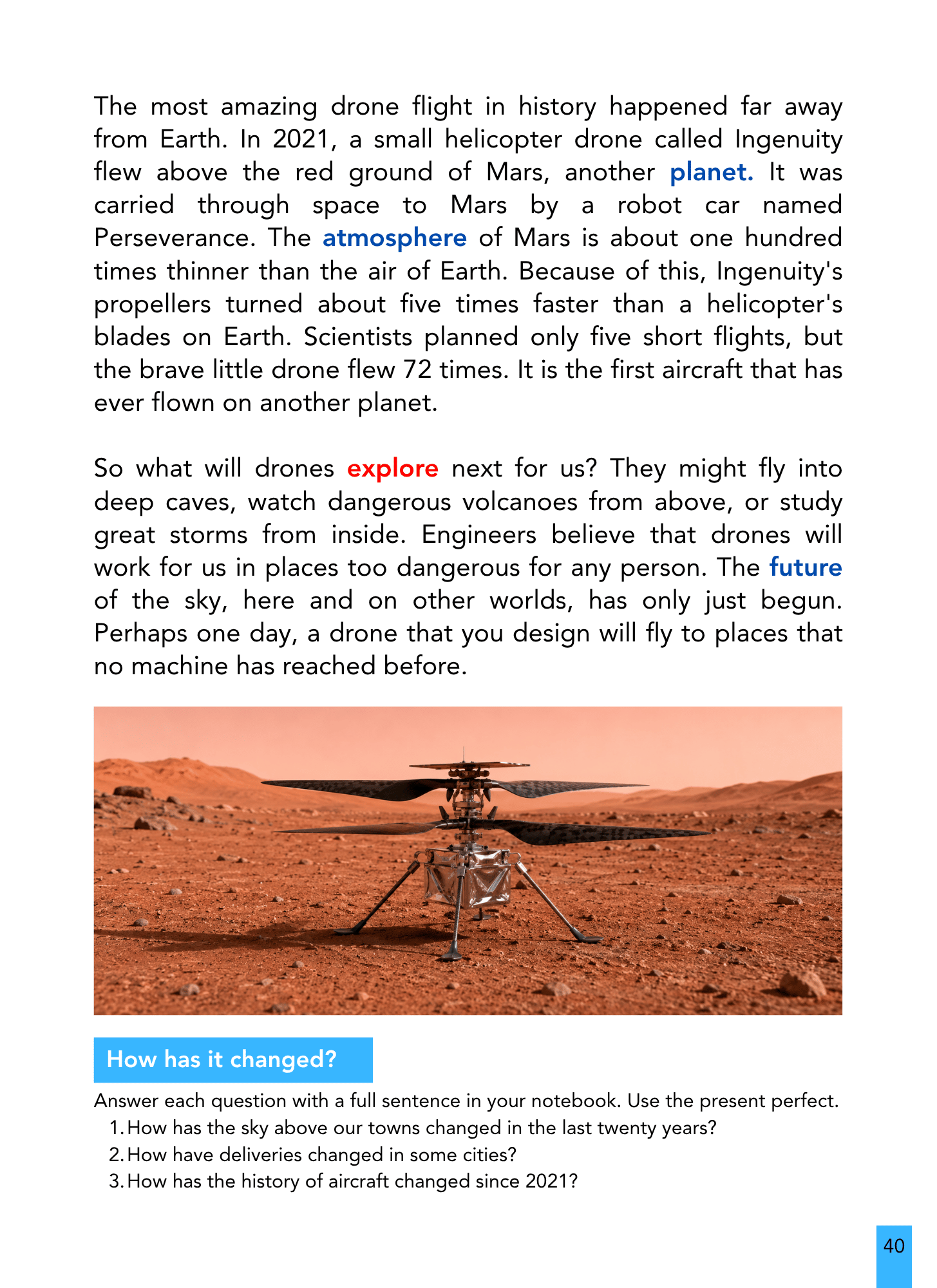
A small helicopter drone hovering above the red Martian surface, rover behind
Drones · Grade 7 · Ch 6

Ingenuity on Mars

A tiny helicopter drone rides to Mars aboard the Perseverance rover. Because the Martian air is about 100 times thinner, its blades spin roughly five times faster than on Earth. Planned for five short hops, it flew 72 times, the first aircraft ever to fly on another planet.

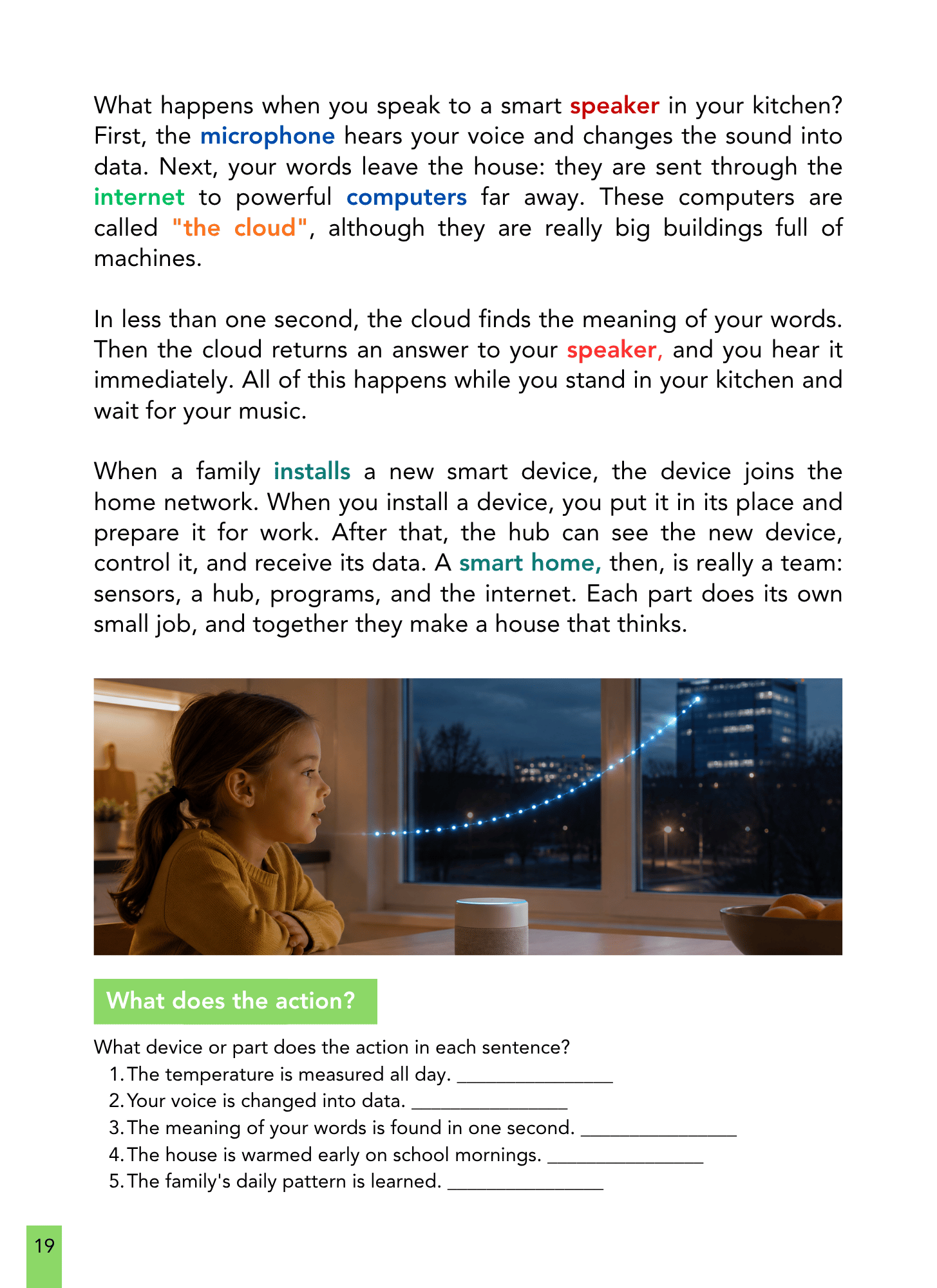
A comprehension task page of passive sentences with a find-the-doer prompt
Smart Homes · Grade 7 · Ch 3

Find the doer

A comprehension task built entirely from agentless passive sentences ("The temperature is measured all day"), where students recover the missing doer from the text. It drills reading comprehension and the grade's flagship grammar point in a single move: grammar taught inside the tasks.

The Türkiye strand

A ready localisation advantage

Four of the ten titles are localised to Türkiye, a clear advantage for the Turkish market, using the official spelling Türkiye throughout. Elsewhere the collection reaches out to world topics.

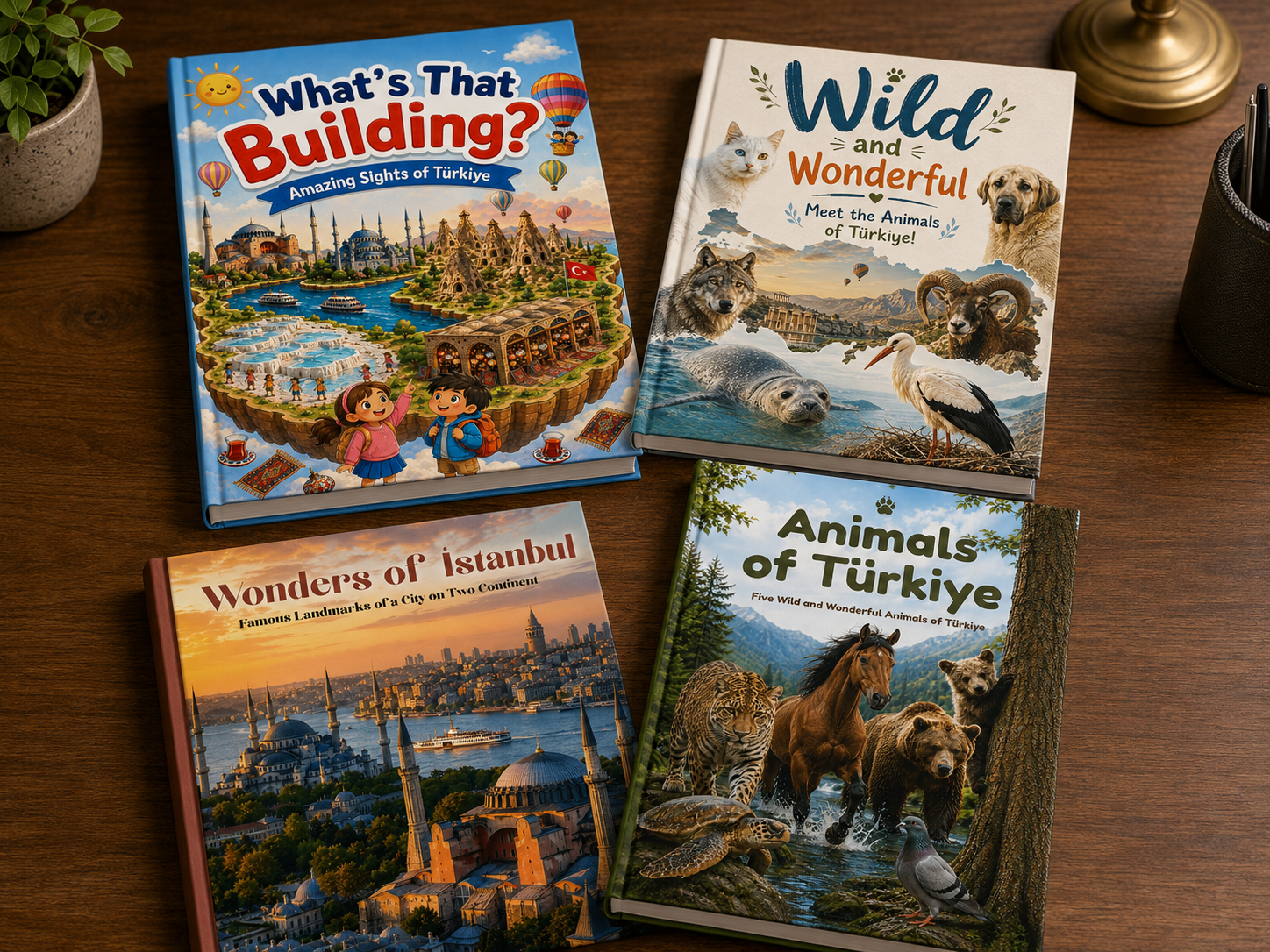
  • What's That Building? (Grade 2): five famous Turkish sights, from Hagia Sophia to Cappadocia and Pamukkale.
  • Wild and Wonderful (Grade 4): six iconic Turkish animals, from the Van cat to the monk seal.
  • Wonders of Istanbul (Grade 5): six landmarks of a city on two continents.
  • Animals of Türkiye (Grade 6): five more Turkish animals, from the Anatolian leopard to the Turkish horse.
Grade 2 Grade 4 Grade 5 Grade 6
A map-and-collage of the four Türkiye titles: Istanbul landmarks, Cappadocia, and Turkish animals
Values, woven in

Values and SEL, lived in the content

Values are woven into the subject content, not bolted on.

Global diversity

Ready, Set, Go! shows children everywhere are alike, with local variations, and carries a cross-cultural note for teachers.

Conservation

Both animal titles and Coolest Places teach hopeful, present-tense conservation: real places and animals we must protect.

Cultural respect

Wonders of Istanbul and What's That Building? frame heritage as shared, with respectful framing of places of worship.

Digital citizenship

Smart Homes runs an honest privacy chapter and Fact-vs-Opinion tasks; Drones covers safety and the peaceful use of technology.

Coursebook alignment

Grade-mapped to Building Futures

Every title carries an explicit Grade 2–7 and CEFR pre-A1 to B1 mapping, which lets a school slot each reader by grade against any grade-structured coursebook. If Building Futures is grade-numbered, this is a clean grade-for-grade alignment.

Coursebook gradeCEFR bandGraded readers at this grade
Building Futures 2pre-A1 / A1Ready, Set, Go! · Who Lives Here? · What's That Building?
Building Futures 3A1Wow! The Coolest Places on Planet Earth · Dinosaur Detectives
Building Futures 4A1+Wild and Wonderful: Meet the Animals of Türkiye!
Building Futures 5A1+ / A2Wonders of Istanbul
Building Futures 6A2Animals of Türkiye
Building Futures 7A2+ / B1Drones: Flying Robots · Smart Homes

This is a grade-mapped alignment by CEFR band and grade level. It is not a documented vocabulary or theme pairing: the fit of specific words and themes should be confirmed against the coursebook of choice.

GR
Let's talk

Let's build futures
together.

Samples, adoption options and commercial details: we would love to discuss them with you in person.

Building Futures Readers logo
The collection Grade 2Grade 3 Grade 4Grade 5 Grade 6Grade 7
Building Futures · Readers
CLIL Graded Readers · Grades 2–7 · pre-A1 → B1